
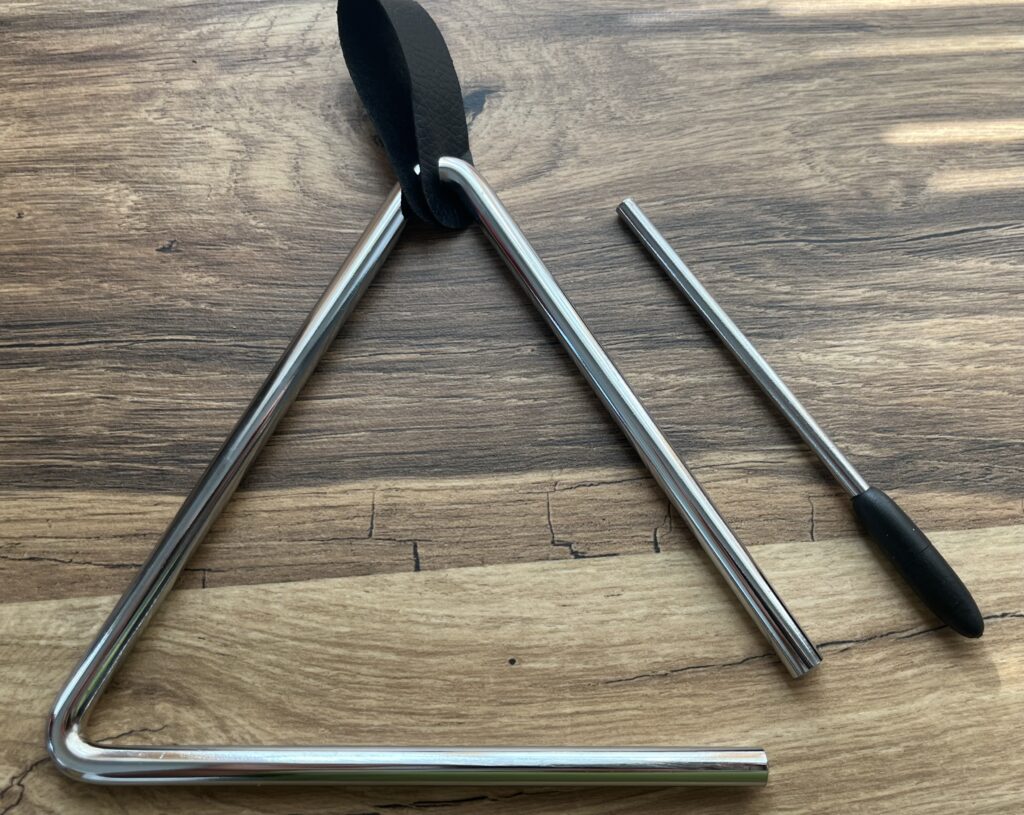
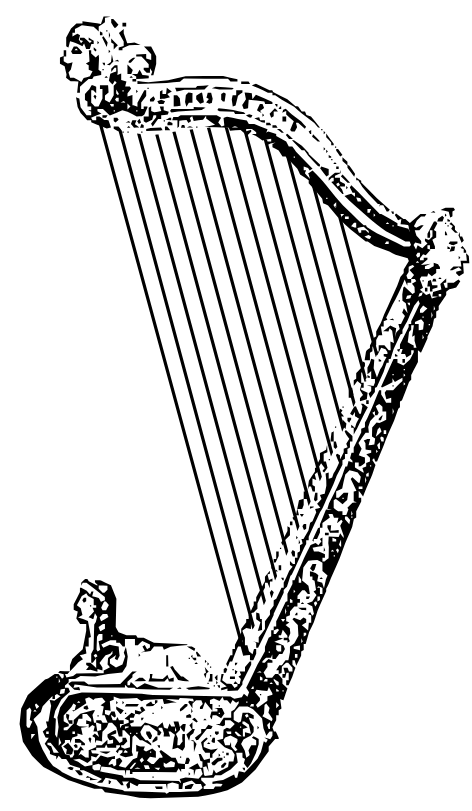
In the novel Triangulum, the significant pieces of music and musical instruments referenced — the harp and the triangle — play an important role in the plot. Music vibrates in a distinctive way through the characters’ personalities, permeates the story as a whole, and in several places assumes a plot-shaping and dramaturgical role. Both the triangle and the harp are also part of the novel’s triangular symbolism…
Musical References in the Novel
- John Taverner: Dum transisset Sabbatum
- Thoinot Arbeau: Belle qui tiens ma vie
- Luca Marenzio: Io morirò d’Amore
- Claudin de Sermisy: Tant que vivray
- Cipriano de Rore: Ancor che col partire
- Marchetto Cara: Non è tempo d’aspettare
- Giorgio Mainerio: Schiarazula Marazula
- François Couperin:
Les Barricades mystérieuses
La Bandoline - George Frideric Handel: Harp Concerto in B flat major
- Christoph Willibald Gluck: Orfeo ed Euridice
- C.P.E. Bach:
Cello Concerto in A major, Allegro, H.439
Harp Concerto in G major - Ludwig van Beethoven:
Piano Sonata No. 17, Op. 31, The Tempest, Allegretto
Piano Sonata No. 21, Op. 53, Waldstein - Franz Schubert:
Piano Trio No. 2 in E flat major, Op. 100, D. 929, Andante con moto
Piano Sonata in A major, D. 959
Impromptu in E flat major, No. 2, D. 899
Night and Dreams - Pietro Mascagni: Cavalleria rusticana, Intermezzo
- Diana Krall: The Look of Love
- Lucio Corsi: Situazione complicata
My thanks to the team at Bartók Radio for introducing and sharing exquisite early music that inspired the novel’s main characters — and, not least, its author — while at times evoking the era of Margaret of Parma and the final years of the Renaissance, as well as for their valuable work in bringing classical music closer to their listeners.